

You might believe that a higher price tag guarantees purer ingredients in your perfume bottle, but 40% of consumers overestimate purity of luxury-priced perfumes. The truth about what drives perfume costs, especially for vegan and cruelty-free luxury-inspired products, is far more complex. This guide breaks down the real factors behind perfume pricing, from ingredient sourcing to brand premiums, helping you make informed choices when shopping for affordable perfumes that align with your values.
Table of Contents
- Ingredient Sourcing And Cost Impact
- Ethical Certification Costs And Pricing
- Brand Influence And Marketing
- Regulatory And Compliance Impact
- Common Misconceptions About Perfume Pricing
- Consumer Preferences And Price Sensitivity
- Pricing Strategies And Market Dynamics
- Summary And Practical Guide For Consumers
- Explore Affordable Luxury Vegan Perfumes At Scentilly
- Frequently Asked Questions
Key Takeaways
| Point | Details |
|---|---|
| Ingredient cost variance | Natural essential oils can cost up to 50 times more than synthetic alternatives, dramatically impacting base production costs. |
| Brand premium addition | Luxury perfume brands add 30 to 50% price premiums driven by prestige positioning and marketing investments. |
| Certification complexity | Vegan and cruelty-free certifications increase production requirements and audit costs, reflected in retail pricing. |
| Consumer misconceptions | Many buyers mistakenly equate higher prices with superior ingredient purity rather than brand positioning. |
| Regulatory compliance | EU allergen labeling and environmental regulations add 5 to 10% to production costs but enhance consumer confidence. |
Introduction to Perfume Pricing
Perfume pricing operates as a complex equation where ingredient quality, brand reputation, production scale, and ethical certifications all play crucial roles. For consumers seeking vegan and cruelty-free luxury perfumes, understanding these cost drivers becomes even more important. You deserve transparency about what you’re paying for beyond the scent itself.
The market for ethical perfumes continues expanding, yet pricing structures remain opaque to most shoppers. Multiple hidden factors influence the final price tag, from certification audits to marketing investments. When you explore options like those in our unisex scents guide, you’re navigating a landscape shaped by both tangible costs and intangible brand value.
Several key elements determine perfume pricing:
- Raw material sourcing costs and ingredient quality tiers
- Certification requirements for vegan and cruelty-free claims
- Brand positioning and marketing expenditures
- Production scale and distribution complexity
- Regulatory compliance across different markets
Consumers increasingly demand transparency about ethical aspects and pricing justification. This shift pushes brands to clarify their value propositions. Resources like our guide to eco-conscious perfume types and choosing unisex fragrances help you decode these pricing signals and make confident purchasing decisions.
Ingredient Sourcing and Cost Impact
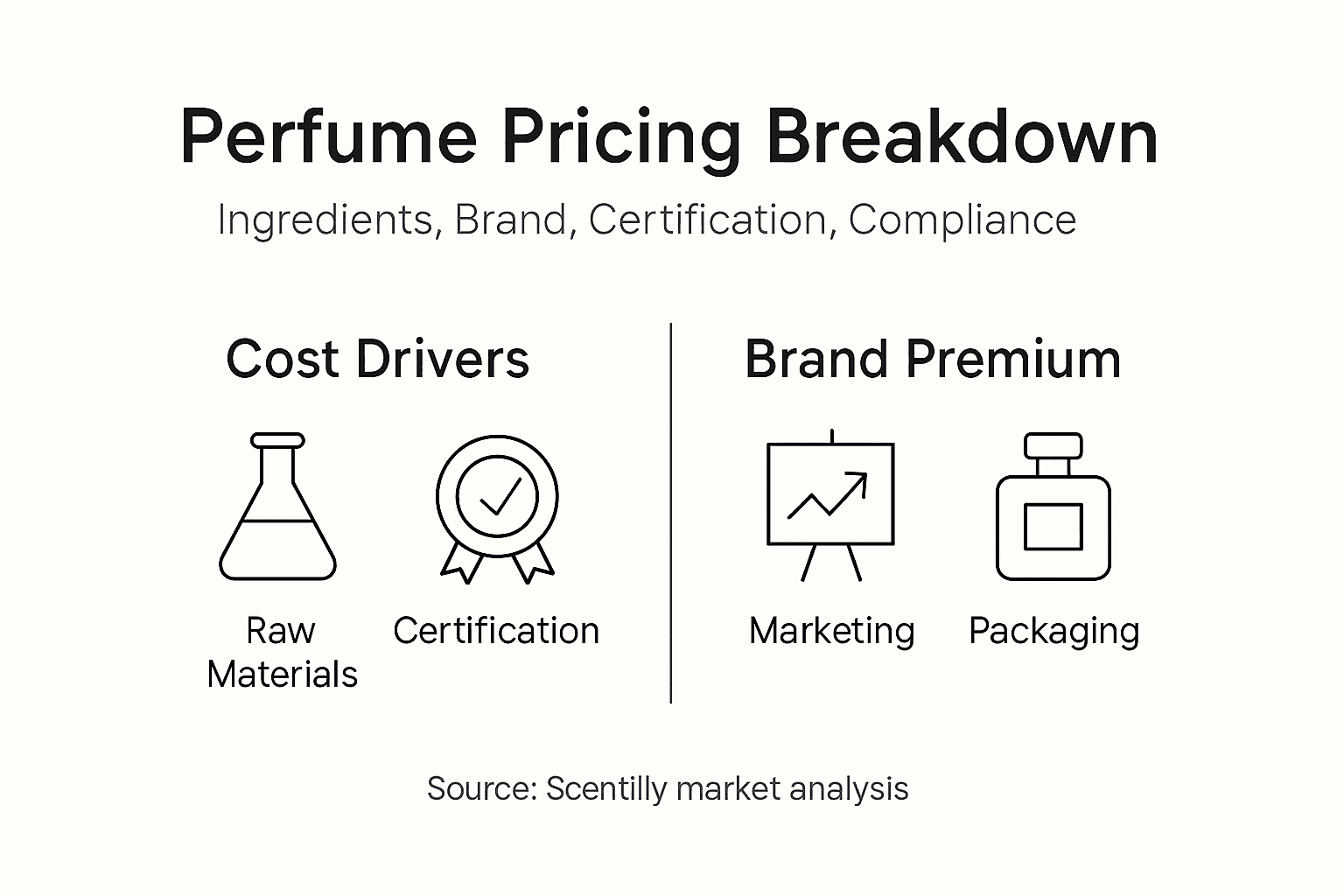
The foundation of perfume pricing starts with raw materials, where quality variations create dramatic cost differences. Natural essential oils can cost up to 50 times more than synthetic ingredients, immediately establishing a baseline price floor for naturally sourced perfumes. This gap explains why two bottles with similar scent profiles might carry vastly different price tags.

Vegan and cruelty-free ingredient sourcing introduces additional constraints. Traditional perfumery often relies on animal-derived musks or beeswax absolutes, but ethical alternatives require specialized botanical extracts. These substitutes typically cost more due to limited supplier networks and smaller production volumes. When brands commit to ethical sourcing, they accept higher per-unit ingredient costs that flow through to retail pricing.
Small-batch and artisanal sourcing methods further elevate costs. Large manufacturers negotiate bulk pricing that reduces per-milliliter expenses, while boutique producers pay premium rates for specialized suppliers. This economies-of-scale disadvantage particularly affects brands featured in our importance of luxury perfumes guide, though many offset this through direct-to-consumer models.
Key ingredient cost factors include:
- Botanical versus synthetic material selection
- Organic certification requirements adding 20 to 40% premiums
- Geographical sourcing affecting extraction and shipping costs
- Seasonal availability creating price fluctuations
- Supplier relationship strength influencing negotiated rates
Pro Tip: Check ingredient lists on perfume websites to assess whether pricing aligns with stated material quality. Transparency about sourcing often signals fair pricing practices.
Ingredient transparency helps you evaluate whether price matches quality. Brands offering detailed breakdowns of their botanical sources demonstrate confidence in their pricing structure. When shopping for affordable vegan perfumes, look for companies that explain their sourcing choices rather than hiding behind vague marketing language.
Ethical Certification Costs and Pricing
Obtaining vegan and cruelty-free certifications requires substantial investment beyond ingredient selection. Third-party organizations audit entire supply chains, from raw material sources through manufacturing facilities, to verify compliance. These audit processes increase production complexity and administrative overhead, costs ultimately passed to consumers through retail pricing.
The vegan cosmetics market growing at 6.3% CAGR reflects increasing demand that justifies certification investments. As consumer expectations rise, brands must demonstrate authenticated ethical commitments. Certification badges provide quick visual proof but represent months of preparation and ongoing compliance monitoring.
Certification impacts pricing through multiple channels:
- Initial application fees ranging from $500 to $5,000 depending on certifying body
- Annual renewal costs maintaining active certification status
- Reformulation expenses adapting existing products to meet standards
- Supply chain documentation proving ingredient traceability
- Manufacturing facility modifications ensuring zero cross-contamination
- Staff training programs educating teams on compliance requirements
Consumers increasingly pay premiums reflecting these ethical commitments. You’re not just buying fragrance molecules but supporting verified humane practices throughout production. The certification premium typically adds 10 to 25% to base production costs, though brands absorbing some expense to remain competitive.
Growing demand for certified products influences overall market pricing structures. As more consumers prioritize ethics, economies of scale gradually reduce per-unit certification costs. Brands featured in our vegan luxury fragrance picks demonstrate how volume growth can maintain ethical standards while improving price accessibility.
Brand Influence and Marketing
Brand heritage and storytelling create emotional connections that elevate willingness to pay beyond raw production costs. Luxury brands command 30 to 50% price premiums justified primarily through brand positioning and experiential marketing rather than ingredient superiority. You’re purchasing association with lifestyle narratives, not just olfactory compounds.
Marketing aligned with ethical values particularly resonates with conscious consumers seeking brands matching their principles. Companies investing in authentic sustainability messaging build trust that translates to pricing power. This dynamic explains why two vegan perfumes with identical ingredient lists might carry different prices based solely on brand perception.
Premium packaging and exclusivity contribute significantly to perceived value. Artistic bottle design, luxurious box materials, and limited availability create psychological justification for higher pricing. These elements cost relatively little to produce but dramatically influence your perception of product worth.
Brand-driven pricing factors include:
- Heritage storytelling and founder narratives
- Celebrity endorsements and influencer partnerships
- Retail environment and boutique presentation
- Digital marketing and social media presence
- Customer service quality and purchase experience
- Artificial scarcity through limited editions
Pro Tip: Research whether a brand’s premium pricing reflects ingredient quality or primarily brand positioning. Compare perfume concentration percentages and ingredient lists across price points to identify true value.
Price premiums often exceed actual ingredient and production cost differences by substantial margins. Understanding this gap empowers you to evaluate whether brand alignment justifies higher spending. Resources like our guide to affordable luxury perfumes help identify brands offering luxury experiences without excessive markups.
Regulatory and Compliance Impact
Strict ingredient and allergen labeling requirements significantly impact perfume production costs, particularly in regulated markets. EU regulations on allergens and environmental labels add around 5 to 10% to production costs, creating baseline compliance expenses before bottles reach shelves. These requirements protect your health but necessarily increase retail pricing.
Environmental claims and packaging regulations add another complexity layer. Brands making sustainability assertions must substantiate these through testing and documentation. Greenwashing penalties push companies toward genuine compliance, requiring investments in verifiable eco-friendly practices. You benefit from increased confidence in marketed claims, though compliance costs flow through to pricing.
Key regulatory cost drivers include:
- Allergen testing and documentation for each formula
- Packaging material compliance with recycling standards
- Environmental claim substantiation through lifecycle analysis
- Safety assessments meeting regional regulatory frameworks
- Ingredient restriction monitoring as regulations evolve
- Multilingual labeling for international distribution
Compliance fosters consumer trust but factors directly into pricing structures. When you choose perfumes meeting stringent standards, you’re supporting systems protecting health and environmental integrity. This investment in safety and transparency justifies modest price increases over unregulated alternatives.
| Regulatory Requirement | Cost Impact | Consumer Benefit |
|---|---|---|
| Allergen labeling | 2-4% price increase | Health safety and informed choices |
| Environmental claims verification | 3-5% price increase | Confidence in sustainability assertions |
| Packaging compliance | 1-3% price increase | Improved recyclability and reduced waste |
| Safety testing | 2-3% price increase | Product safety assurance |
Regulatory costs differ by market but impact global pricing strategies. Brands selling internationally must meet the strictest applicable standards, often adopting EU requirements as baseline. This standardization simplifies production but means you indirectly pay for compliance even in less regulated markets. Resources like our guide on authentic perfume buying help verify regulatory compliance when shopping online.
Common Misconceptions About Perfume Pricing
Higher price tags don’t automatically guarantee purer or higher-quality ingredients, yet 40% of consumers overestimate ingredient purity of luxury-priced perfumes. This widespread misconception drives poor purchasing decisions, with buyers assuming cost directly correlates with material superiority. Brand positioning and marketing expenditures often explain price differences more than ingredient quality variations.
Vegan and cruelty-free perfumes can absolutely be affordable despite certification costs. Direct-to-consumer models and efficient production scaling allow ethical brands to offer competitive pricing. You don’t need to sacrifice your budget to align purchases with values. Many brands prove that ethical commitments and accessibility coexist successfully.
Scent quality primarily drives purchase satisfaction, not ethical claims alone. While certifications matter for conscious consumers, a perfume must deliver olfactory pleasure first. You’ll rarely repurchase a certified fragrance that doesn’t resonate with your scent preferences, regardless of ethical credentials. The most successful ethical perfumes balance values with excellent fragrance composition.
Common pricing myths include:
- Expensive perfumes always use superior natural ingredients
- Synthetic fragrances are inherently lower quality
- Vegan certification automatically means premium pricing
- Brand heritage guarantees ingredient excellence
- Heavier bottles indicate higher-quality contents
- Niche brands always offer better value than mass-market options
Consumers often confuse marketing sophistication with ingredient value. Polished brand presentations and compelling storytelling create perceptions of quality that may exceed actual material differences. Developing critical evaluation skills helps you separate genuine value from persuasive packaging. Our guide addressing perfume pricing misconceptions provides additional frameworks for assessing true worth.
Educating yourself about ingredient costs, certification requirements, and brand positioning empowers smarter purchasing. You’ll recognize when premium pricing reflects genuine quality investments versus primarily marketing expenditures. This knowledge transforms you from passive consumer to informed evaluator, maximizing satisfaction per dollar spent.
Consumer Preferences and Price Sensitivity
Authenticity and scent quality dominate purchase decisions for eco-conscious buyers, with Gen Z consumers prioritizing scent quality first, purpose second. This hierarchy influences pricing strategies as brands recognize that ethical credentials alone won’t justify premiums without excellent fragrance performance. You demand both values alignment and olfactory satisfaction, refusing to compromise either dimension.
Emotional connection justifies price premiums among target consumers more effectively than rational arguments. When you feel personal resonance with a fragrance, price resistance diminishes significantly. This psychological dynamic explains why experiential marketing and storytelling command such substantial brand investments. Companies cultivating emotional bonds access pricing power unavailable to purely transactional competitors.
Price personalization emerges as a growing trend affecting perception of fairness. Some consumers discover they paid more for identical products than others, creating dissatisfaction even when absolute prices remain reasonable. You increasingly expect consistent pricing and transparency about any differential strategies employed.
Key preference patterns shaping pricing acceptance:
- Scent performance and longevity outweigh ethical claims in repurchase decisions
- Transparency about ingredient sourcing builds trust supporting premium acceptance
- Brand authenticity in values messaging influences willingness to pay
- Peer recommendations carry more weight than celebrity endorsements
- Sampling opportunities reduce price risk and increase conversion
- Subscription models smooth cost perception through recurring small payments
Segmented consumer responses highlight diverse sensitivity to price changes. Budget-conscious shoppers actively seek discounts and compare options extensively, while luxury enthusiasts accept premiums for preferred brands. Understanding your personal price sensitivity helps align purchases with financial comfort. Resources like our guide on selecting vegan luxury perfumes help navigate options across price tiers.
Your purchase decisions ultimately reflect complex interactions between values, sensory preferences, and budget constraints. Brands succeeding in ethical luxury perfume markets balance all three dimensions, offering compelling scents at justifiable prices with verified credentials.
Pricing Strategies and Market Dynamics
AI-driven dynamic pricing increasingly appears in perfume retail, with 40% of firms using AI for real-time price personalization. This technology adjusts prices based on browsing history, location, and predicted willingness to pay. You might see different prices than other shoppers for identical products, creating fairness concerns even when algorithms optimize for conversion.
Real-time price personalization creates variability that can frustrate transparency-seeking consumers. While retailers argue personalization improves accessibility by offering discounts to price-sensitive shoppers, others perceive discrimination. This tension between optimization and fairness continues evolving as AI pricing becomes more sophisticated.
Market demand elasticity varies dramatically across consumer segments in luxury perfumes. Luxury goods experience segmented responses to price changes, with some consumers actively seeking discounts while others interpret lower prices as quality signals. Brands must carefully calibrate pricing strategies to avoid alienating either segment.
| Pricing Strategy | Implementation | Consumer Impact |
|---|---|---|
| Dynamic pricing | AI algorithms adjust by browsing behavior | Variable prices, potential fairness concerns |
| Tiered pricing | Multiple product lines at different price points | Accessibility across budgets, clear value hierarchy |
| Subscription models | Recurring payments for regular shipments | Lower per-unit costs, commitment requirement |
| Limited editions | Premium pricing for exclusive releases | Scarcity-driven urgency, collector appeal |
Pricing strategies reflect both cost drivers and consumer response behaviors. You encounter sophisticated systems designed to maximize your willingness to pay while maintaining competitive positioning. Understanding these tactics helps you evaluate whether prices align with your value assessment rather than purely algorithmic manipulation.
Market dynamics continue shifting as ethical consumerism grows. Brands investing early in transparent, values-based pricing build loyalty that insulates against pure price competition. When shopping for alternatives like those in our perfume pricing alternatives guide, look for companies prioritizing clear value communication over psychological pricing tricks.
Summary and Practical Guide for Consumers
Look beyond price tags to evaluate ingredient quality and authentic ethical certifications when selecting perfumes. Price alone reveals little about material superiority or values alignment. You need to examine actual ingredient lists, certification badges, and brand transparency practices to assess true worth.
Verifying certification authenticity protects against greenwashing while ensuring your money supports genuine ethical practices. Research certifying organizations and confirm badges link to valid registrations. Legitimate certifications represent substantial brand investments, distinguishing committed companies from opportunistic marketers.
Practical evaluation steps:
- Compare ingredient lists across price points to identify quality correlations
- Research certification bodies to understand verification rigor
- Test sample sizes before committing to full-bottle purchases
- Calculate cost per wear based on expected usage frequency
- Prioritize brands offering transparency about sourcing and pricing
- Balance scent preference against ethical credentials and budget
- Monitor for dynamic pricing by checking costs across devices and sessions
Match perfume choices to your scent preferences and budget constraints without guilt. Affordable options exist across ethical categories, and higher spending doesn’t guarantee better experiences. Your perfect perfume balances fragrance resonance, values alignment, and financial comfort. Resources like our affordable luxury perfume guide demonstrate that accessibility and quality coexist.
Consider brand reputation but prioritize your personal fragrance connection and perceived value. Heritage and prestige matter if they enhance your enjoyment, but don’t let marketing override your sensory preferences. You’re the ultimate authority on what scent works for your body chemistry and lifestyle.
Pro Tip: Create a personal perfume evaluation framework weighting scent quality, ethical certifications, and price according to your priorities. This systematic approach clarifies decisions when comparing options.
Confident purchasing emerges from understanding the complete pricing picture. You now recognize ingredient costs, certification investments, brand premiums, and regulatory compliance as distinct pricing components. This knowledge transforms shopping from guesswork into informed evaluation. Additional guidance on choosing vegan luxury perfumes helps apply these principles to specific selections.
Explore Affordable Luxury Vegan Perfumes at Scentilly
Now that you understand perfume pricing complexities, discover how Scentilly delivers exceptional value through curated affordable luxury vegan perfumes. We combine ethical sourcing with premium scents, offering transparent pricing that reflects genuine quality investments rather than excessive markups.
Our collection features authenticated vegan and cruelty-free fragrances from trusted brands like Chogan, balancing Italian craftsmanship with accessible pricing. You’ll find alternatives to mainstream luxury brands without compromising scent sophistication or ethical standards. Explore our affordable luxury perfumes alternatives to see how smart shopping delivers both values and value.
Benefit from expert guidance through our vegan luxury unisex fragrances featuring 12-hour longevity picks. We’ve done the research, testing, and verification so you can shop confidently. Visit Scentilly today to experience how affordable luxury and ethical commitments combine in every bottle.
Frequently Asked Questions
What factors determine perfume pricing?
Ingredient quality, brand positioning, ethical certifications, production scale, and regulatory compliance all contribute significantly to final perfume pricing. Marketing investments and packaging choices add additional cost layers beyond raw materials. You’re paying for a combination of tangible production expenses and intangible brand value that varies dramatically across products.
How do vegan and cruelty-free certifications impact price?
These certifications increase production complexity through supply chain audits and documentation requirements, raising costs typically reflected in 10 to 25% price premiums. However, growing demand and market maturation gradually reduce these premiums as economies of scale improve. You’ll find increasingly competitive pricing as ethical perfumes become mainstream rather than niche.
Why do some luxury perfumes cost 30 to 50% more?
Luxury brands leverage prestige positioning, heritage storytelling, exclusivity, and premium packaging to justify substantial price premiums beyond ingredient costs. You’re paying for emotional connection, lifestyle association, and experiential marketing rather than proportionally superior materials. These premiums reflect brand power more than production expense differences.
Can I find affordable vegan luxury perfumes?
Absolutely. Brands featured on Scentilly demonstrate that ethical certifications and luxury experiences coexist with accessible pricing through efficient operations and direct-to-consumer models. Smart shopping focusing on ingredient transparency and certification verification delivers excellent value. Explore our affordable vegan luxury perfumes to discover options balancing ethics, quality, and budget.
Does higher price guarantee better perfume quality?
No. Price reflects multiple factors including brand positioning and marketing expenses that don’t correlate directly with ingredient purity or scent quality. Many affordable perfumes use excellent materials while expensive options may invest primarily in packaging and prestige. Critical evaluation of ingredients and certifications reveals true quality better than price alone.