

Your fragrance preference isn’t fixed. It shifts by up to 70% during your menstrual cycle, driven by hormones you can’t control. Understanding why you gravitate toward certain scents goes beyond simple likes and dislikes. Biology, emotions, and personal values intersect to shape your fragrance choices in ways you might not realize. This article explores the science and psychology behind women’s scent preferences, offering practical insights for selecting luxury, vegan, and cruelty-free perfumes that truly resonate with you.
Table of Contents
- Introduction To Women’s Scent Preferences
- Biological And Hormonal Influences On Female Scent Preference
- Emotional And Psychological Factors Shaping Fragrance Choice
- Importance Of Ethical Fragrance Attributes (Vegan, Cruelty-Free)
- Common Misconceptions About Women’s Scent Preferences
- Framework To Understand How Women Choose Scents
- Tradeoffs And Decision Criteria In Scent Selection
- Application In Personal Use And Gifting
- Explore Ethical Luxury Scents At Scentilly
- Frequently Asked Questions About Women’s Scent Preferences
Key takeaways
| Point | Details |
|---|---|
| Hormonal cycles dramatically shift scent preferences | Your menstrual cycle causes up to 70% variation in which fragrance notes attract you most. |
| Emotions and memories drive fragrance choices | About 75% of women report mood enhancement from wearing certain perfumes linked to positive memories. |
| Ethical certifications matter significantly | Vegan and cruelty-free status influences purchasing decisions and increases willingness to invest more. |
| Common myths mislead fragrance selection | Only 40% of women prefer floral scents; many favor woody, spicy, or fresh notes instead. |
| A structured framework simplifies scent selection | Three axes covering biology, emotion, and ethics help you choose perfumes confidently for yourself or as gifts. |
Introduction to women’s scent preferences
Why do you love one perfume but recoil from another that your friend adores? Scent preference operates on multiple interconnected levels. Your biology, emotional history, cultural background, and personal values all contribute to what smells appealing. Women aged 25 to 45 increasingly seek fragrances that align with ethical standards, particularly vegan and cruelty-free certifications.
Understanding these dimensions transforms how you approach fragrance selection. Whether you’re choosing a signature scent or selecting a gift, recognizing what drives preference helps you make choices that feel authentic and satisfying. The difference between biological scent differences and personal taste becomes clearer when you examine each influence separately.
Key terms matter here. Vegan perfumes contain no animal-derived ingredients like musk or ambergris. Cruelty-free means no animal testing occurred during development. Scent families include floral, woody, spicy, fresh, and oriental categories. Luxury fragrances emphasize quality ingredients and sophisticated blends, though luxury doesn’t always mean complexity.
These preferences shape both personal use and gifting decisions. When you understand what influences scent preference, you avoid common mistakes:
- Assuming all women prefer sweet or floral notes
- Overlooking ethical certifications that matter to the recipient
- Ignoring how hormonal timing affects daily scent choices
- Selecting complex blends when simpler compositions might resonate more
Biological and hormonal influences on female scent preference
Your body chemistry changes constantly, and your nose notices. Hormonal changes throughout your menstrual cycle shift which scent notes appeal most. During ovulation, you’re drawn to musky and spicy fragrances. In other phases, you might prefer fresh or floral options instead.
This biological sensitivity extends beyond monthly cycles. Daily cortisol rhythms affect scent intensity tolerance. You might love a bold perfume in the morning but find it overwhelming by evening. Your olfactory receptors function differently based on stress levels, fatigue, and even diet.
Women’s scent perception varies significantly across hormonal states, with ovulation increasing attraction to deeper, more complex fragrance notes by measurable margins.
Understanding these patterns helps you anticipate preference shifts. You’re not being inconsistent when yesterday’s favorite perfume feels wrong today. Your biology is communicating changing needs. Some women track these patterns and rotate fragrances accordingly, matching scent intensity and family to their current hormonal state.
The biological scent differences between individuals also play a role. Your unique skin chemistry interacts with fragrance compounds differently than anyone else’s. What smells divine on your friend might turn sharp on you. This biological individuality explains why sampling on your own skin matters more than smelling from a bottle.
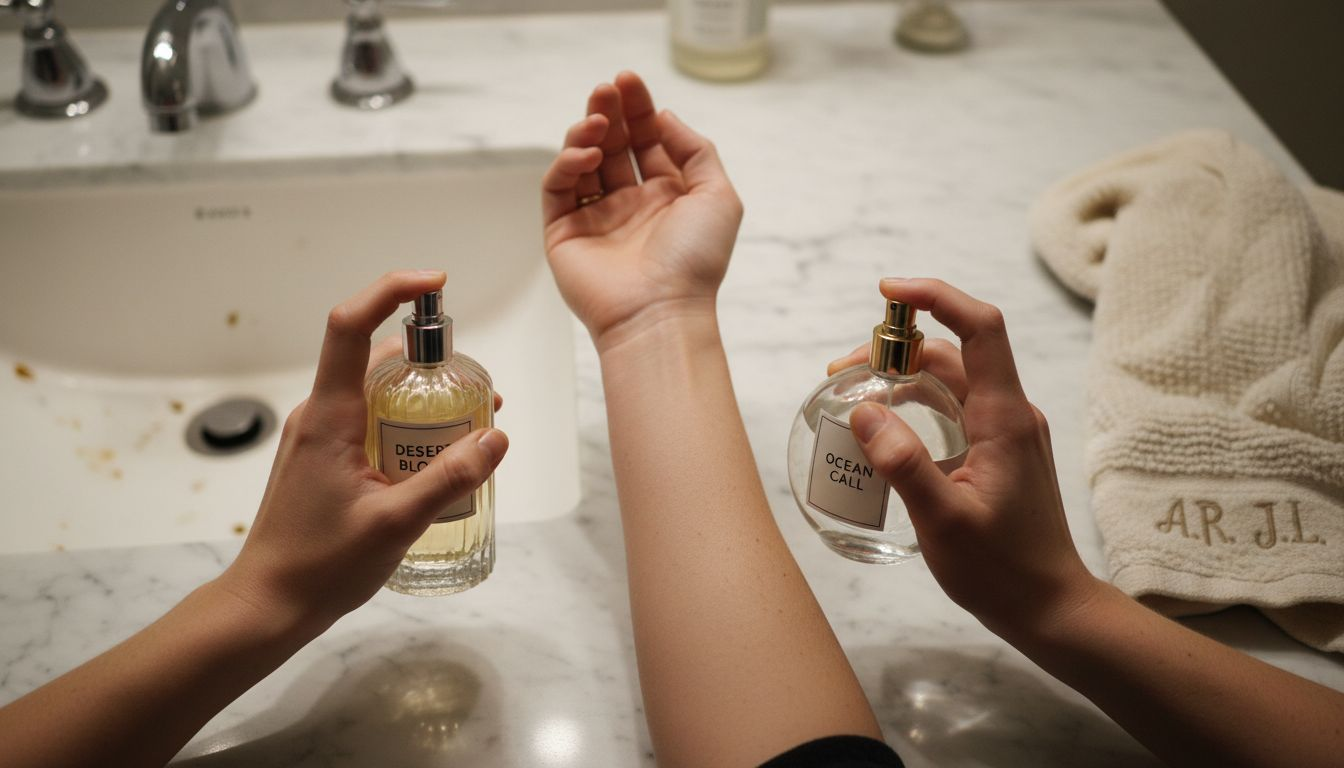
These subconscious biological drivers operate whether you recognize them or not. Awareness simply gives you better control over fragrance choices that work with your body rather than against it.
Emotional and psychological factors shaping fragrance choice
Your emotional connection to scent runs deeper than conscious preference. Smell links directly to your limbic system, the brain region processing emotions and memories. This is why certain fragrances instantly transport you to specific moments or feelings.
About 75% of women report mood enhancement from wearing particular perfumes. You’re not imagining the confidence boost from your signature scent. The fragrance triggers positive associations your brain has stored, releasing corresponding emotional states. This psychological mechanism makes scent selection deeply personal.
Many women don’t realize how much emotional scent influences drive their preferences. You might think you simply like vanilla, but the preference likely traces to comforting childhood memories or positive experiences associated with that note. Your subconscious evaluates fragrances based on accumulated emotional data.
Fragrance becomes an emotional identity marker. The perfume you choose signals how you want to feel and how you want others to perceive you. This explains why you might own multiple fragrances for different moods or occasions:
- Energizing citrus blends for productive mornings
- Comforting vanilla or amber for relaxation
- Sophisticated woody notes for professional settings
- Romantic florals for social occasions
Pro Tip: Keep a simple fragrance journal for two weeks. Note which scents you reach for on different days and how you feel. Patterns emerge that reveal your emotional scent preferences more clearly than trying to analyze them abstractly.
Recognizing these emotional drivers helps you select fragrances that genuinely resonate. You’re not just buying a pleasant smell. You’re choosing an emotional tool that affects your daily experience and self-expression.
Importance of ethical fragrance attributes (vegan, cruelty-free)
Your values shape your scent preferences as much as biology and emotion do. Women increasingly prioritize vegan and cruelty-free certifications when selecting perfumes. This isn’t just a trend. It reflects fundamental beliefs about animal welfare and environmental responsibility.
Ethical certifications influence purchasing decisions significantly. Many women report they’d rather skip a fragrance entirely than compromise on cruelty-free standards. This value-driven preference often supersedes even scent appeal. A perfume might smell incredible, but if it fails ethical criteria, it becomes unacceptable.
The connection between ethical fragrance preferences and emotional satisfaction runs deeper than simple rule following. Wearing a vegan, cruelty-free perfume aligns your daily choices with your identity. This alignment creates emotional comfort that enhances how you experience the scent itself.
Brands embracing ethical production often gain stronger loyalty. When you find a luxury fragrance line that delivers both quality and ethics, you’re more likely to become a repeat customer and recommend it to others. Key ethical considerations include:
- No animal testing at any production stage
- Plant-based or synthetic ingredients only
- Transparent supply chain and ingredient sourcing
- Environmental responsibility in packaging and shipping
Pro Tip: Don’t assume ethical fragrances sacrifice quality or longevity. Modern formulation science creates vegan perfumes that match or exceed traditional luxury options in complexity and staying power.
Choosing ethical fragrances supports values that extend beyond personal use. Your purchase decisions signal market demand for responsible production. This creates satisfaction that compounds the pleasure of wearing a beautiful scent you genuinely love.
Common misconceptions about women’s scent preferences
Stereotypes about women’s fragrance preferences cause confusion and poor choices. Only about 40% of women actually prefer floral scents. Many gravitate toward woody, spicy, fresh, or oriental notes instead. Cultural exposure and personal experience shape preference more than gender.
Another myth suggests luxury perfumes must be complex and intense. In reality, many women prefer simpler compositions, especially in vegan fragrances where clean, recognizable notes appeal more than dense layering. Luxury relates to ingredient quality and formulation skill, not necessarily complexity.
People often assume scent preference is entirely conscious. Your subconscious emotional responses and biological states drive much of what you find appealing. You might think you’re choosing rationally, but your limbic system is making most decisions based on factors you can’t directly observe.
| Myth | Reality |
|---|---|
| All women love floral fragrances | Only 40% prefer florals; many favor woody, spicy, or fresh notes |
| Luxury means complex and strong | Simplicity and subtlety often define modern luxury vegan perfumes |
| Scent preference is purely personal choice | Biology and subconscious emotions heavily influence what appeals to you |
| Vegan perfumes lack sophistication | Quality vegan fragrances match traditional luxury in complexity and longevity |
| One signature scent works for all occasions | Most women benefit from rotating fragrances to match mood and hormonal state |
Avoiding these misconceptions improves both personal selection and gift giving. Don’t assume someone’s age or style dictates their scent preference. Individual biology, emotional history, and values create unique profiles that defy stereotyping.
Framework to understand how women choose scents
A three-axis model organizes the complex factors influencing scent preference. This framework helps you analyze and predict which fragrances resonate most. Each axis contributes roughly equally, though personal weighting varies.
The biological/hormonal axis includes menstrual cycle phase, daily rhythms, stress levels, and individual body chemistry. The emotional/memory axis covers personal associations, mood enhancement goals, identity expression, and comfort seeking. The ethical/values axis encompasses cruelty-free requirements, vegan certification, environmental concerns, and brand transparency.
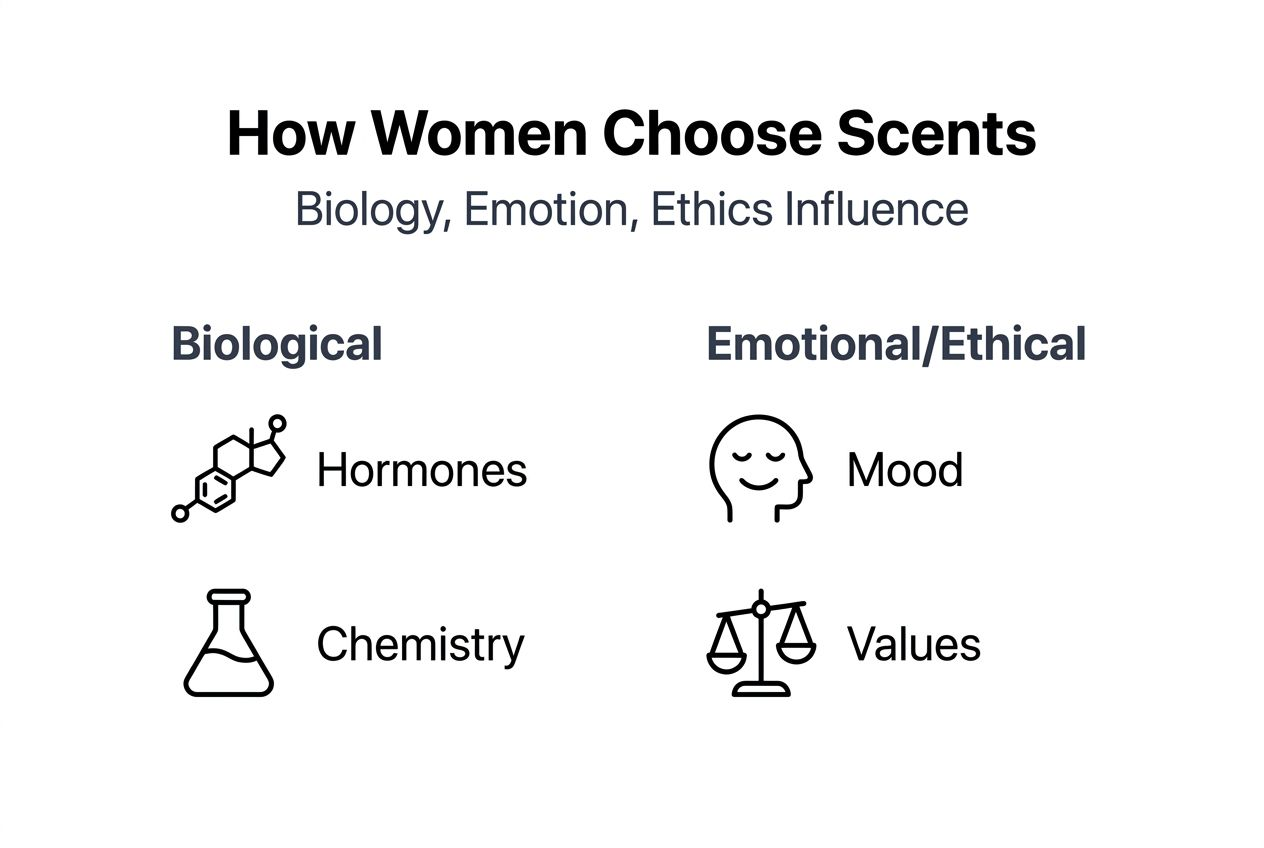
Understanding the three-axis scent selection model transforms fragrance selection from guesswork to informed choice. You can evaluate any perfume against these criteria to predict satisfaction. Personal axis weighting changes based on context. Buying for yourself might emphasize emotional factors, while gifting prioritizes the recipient’s ethical standards.
| Axis | Key Influencing Factors | Example Application |
|---|---|---|
| Biological/Hormonal | Menstrual cycle phase, daily cortisol rhythm, skin chemistry | Choose lighter scents during high-sensitivity phases; rotate intensity based on energy levels |
| Emotional/Memory | Personal associations, mood goals, identity expression | Select fragrances linked to positive memories or desired emotional states |
| Ethical/Values | Vegan certification, cruelty-free testing, brand transparency | Prioritize brands meeting non-negotiable ethical standards before considering scent |
This model works for both personal use and gifting decisions. When choosing for someone else, you assess their position on each axis based on what you know about their biology, emotional preferences, and stated values. The framework reduces decision overwhelm by organizing multiple factors into manageable categories.
Applying this structure systematically improves your success rate in finding fragrances that deliver lasting satisfaction rather than initial appeal that fades.
Tradeoffs and decision criteria in scent selection
Choosing perfume involves balancing competing priorities. You might love complex layered fragrances but need something simpler for daily wear. About 35% of women prefer simpler scent compositions over elaborate luxury blends when selecting vegan perfumes.
Intensity represents another common tradeoff. Strong projection makes a statement but risks overwhelming in close quarters. Light fragrances feel safer but might not satisfy your desire for presence. Your choice depends on lifestyle, workplace environment, and personal confidence.
Ethical certifications sometimes limit fragrance options. Traditional luxury houses may not offer vegan alternatives, forcing you to choose between prestige brands and values alignment. However, the gap narrows as more companies recognize demand for vegan versus luxury scent tradeoffs.
Common decision criteria include:
- Longevity versus subtlety in scent projection
- Complexity versus simplicity in note structure
- Prestige branding versus ethical certification
- Price point versus ingredient quality
- Versatility versus occasion-specific character
Pro Tip: Identify your non-negotiable criteria first. If cruelty-free certification is mandatory, eliminate options that don’t qualify before evaluating other factors. This sequential filtering prevents decision paralysis and values compromise.
Understanding these tradeoffs helps you prioritize effectively. Perfect fragrances rarely exist. You’re optimizing across multiple dimensions based on current needs and context. Your ideal daily perfume differs from your ideal evening fragrance because the decision criteria shift.
Application in personal use and gifting
Applying scent preference knowledge transforms theory into practical success. For personal selection, track your hormonal timing. Notice which fragrances appeal during different menstrual phases. Stock options that match these predictable shifts rather than forcing one signature scent.
Recognize emotional connections before shopping. If you’re seeking confidence, identify which note families historically made you feel powerful. If you want comfort, recall scents from positive memories. This emotional clarity guides you toward fragrances that deliver desired psychological effects.
Prioritize ethical certifications matching your values. If animal welfare matters deeply, make cruelty-free status your first filter. This prevents the disappointment of loving a scent you can’t ethically purchase.
For gifting, research the recipient’s position on each framework axis. Ask subtle questions about their current favorite fragrances and why they love them. Observe which ethical causes they support. This reconnaissance dramatically improves gift success rates.
Follow this applying scent selection framework approach:
- Assess biological considerations like typical energy levels and sensitivity to intensity
- Identify emotional needs such as mood enhancement goals or desired identity expression
- Confirm ethical requirements including vegan, cruelty-free, or environmental standards
- Apply the three-axis model to evaluate specific fragrance options against these criteria
- Sample finalists on skin over several days to test biological compatibility
This systematic approach reduces mismatches and buyer’s remorse. You’re making informed decisions based on multiple relevant factors rather than initial impression alone.
Explore ethical luxury scents at Scentilly
Now that you understand what drives scent preferences, finding fragrances that check all your boxes becomes easier. Scentilly specializes in luxury-inspired perfumes that meet ethical standards without compromising quality. The curated selection focuses on vegan, cruelty-free options that align with the values and preferences we’ve discussed.
Every fragrance option at Scentilly delivers Italian-made quality at accessible price points. You’ll find scent families spanning floral, woody, spicy, and fresh categories, addressing the diversity of women’s preferences beyond stereotypes. The Chogan scented body cream line extends your fragrance experience with matching products that layer beautifully.
Explore the collection with your new framework in mind. Consider your biological timing, emotional needs, and ethical priorities as you browse. The detailed product descriptions help you evaluate options against your personal three-axis criteria. Fast shipping and clear return policies reduce purchase risk.
Frequently asked questions about women’s scent preferences
Why do women’s scent preferences change with their menstrual cycle?
Hormonal fluctuations alter olfactory receptor sensitivity throughout your cycle. During ovulation, elevated estrogen increases attraction to musky, spicy notes that signal fertility and confidence. Other phases shift preference toward lighter, fresher scents as your body prioritizes different biological signals.
How can I tell if a fragrance matches my emotional personality?
Pay attention to your immediate gut reaction when first smelling a perfume. If it triggers positive feelings or memories within seconds, your limbic system is signaling compatibility. Wear it for a full day and notice if it enhances your mood or feels like a comfortable extension of yourself throughout various activities.
Are vegan and cruelty-free perfumes less long-lasting?
No, modern formulation science creates plant-based and synthetic alternatives that match or exceed traditional animal-derived ingredients in longevity and projection. Quality vegan perfumes use advanced fixatives that ensure lasting power without compromising ethical standards.
What are common mistakes when choosing perfume as a gift?
Assuming the recipient’s preference based on age, style, or gender stereotypes leads to mismatches. Ignoring their stated ethical values about animal testing or vegan products causes disappointment even if the scent appeals. Not researching their current favorite fragrances means you’re guessing rather than choosing strategically.
Can simple scents be as luxurious as complex perfumes?
Absolutely. Luxury relates to ingredient quality, formulation skill, and how a fragrance makes you feel, not note count. Many women find simple, well-executed compositions more sophisticated than busy, complex blends that try to include every trendy note.